A slow, honest book review
This post contains affiliate links (Amazon) · Ad. If you buy through them, I earn a small commission at no extra cost to you — and it helps support the content I create here. All opinions are my own.
Some sewing books teach you a technique. This one teaches you a way of looking.
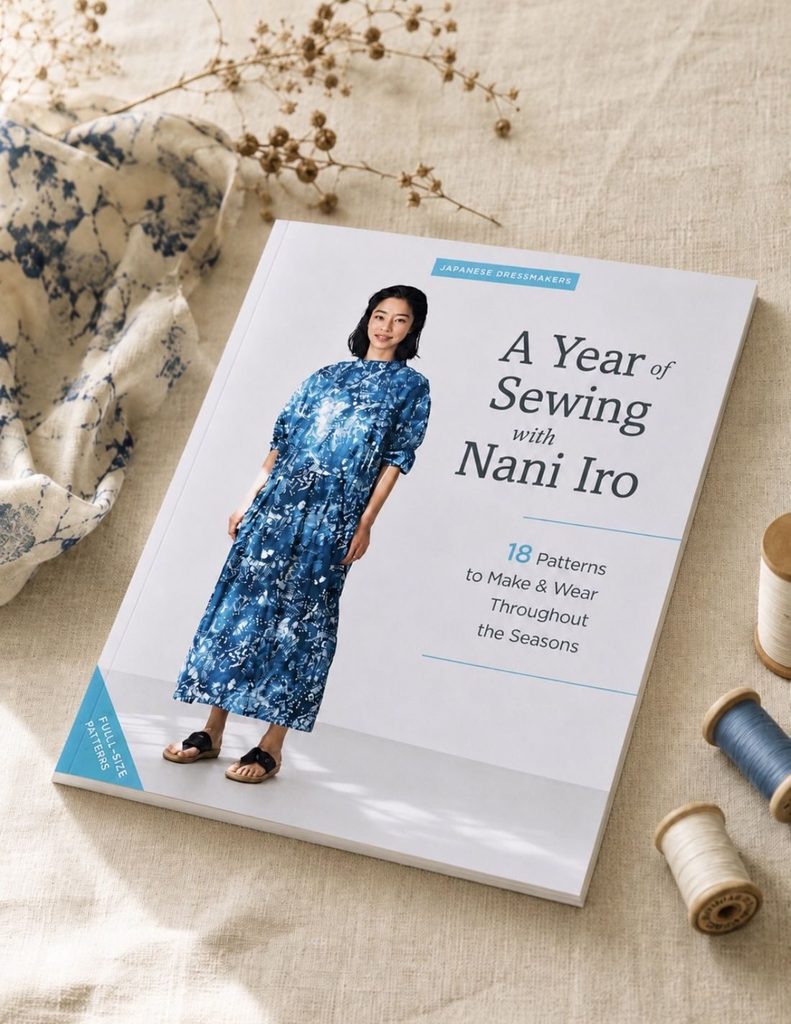
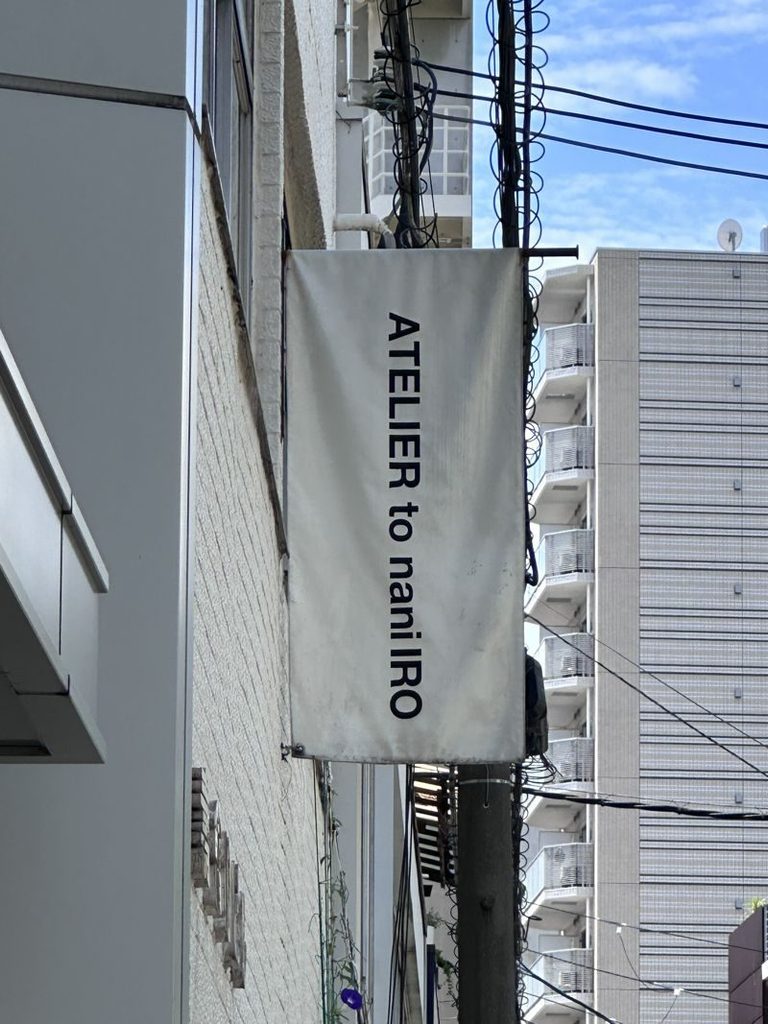
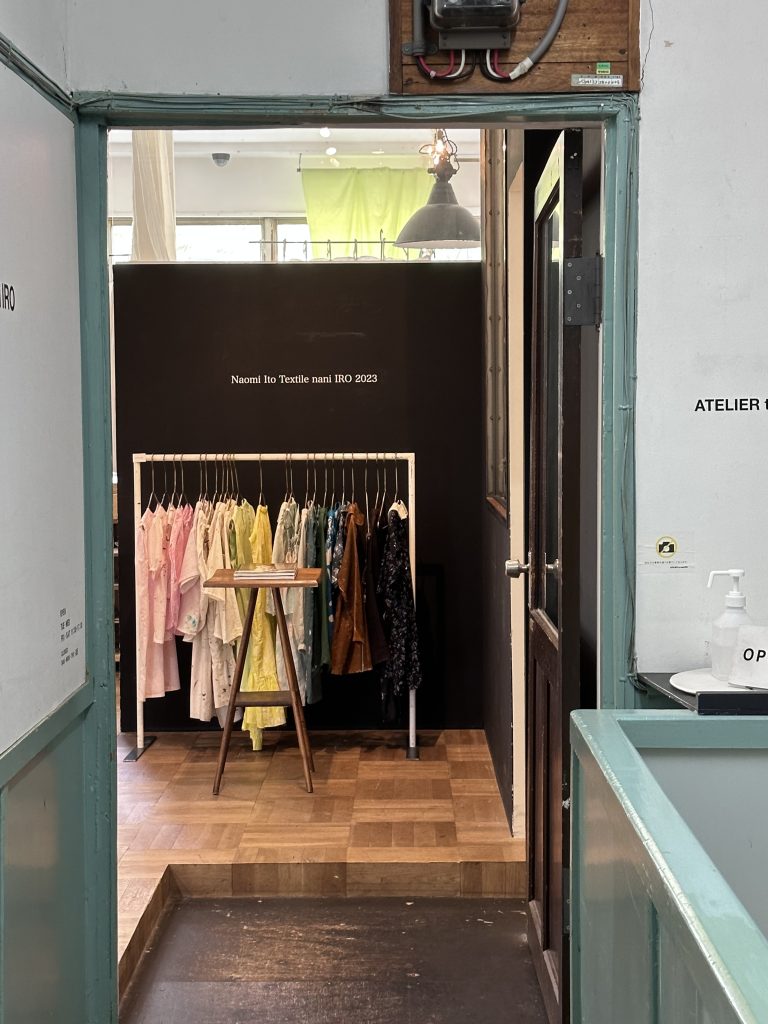
Nani Iro is the work of Naomi Ito, a Japanese designer. Her textiles feel less like yardage and more like small paintings: watercolor washes, botanical marks, double gauze that drapes like a second skin. I visited her atelier in Osaka once. It was quiet in a way that stays with you. Nothing rushed, nothing loud. Every color looked chosen as if it had been waited for. Bolts of double gauze and linen sat stacked on plain black tables, and a rail of finished pieces stood by the window. A Year of Sewing with Nani Iro carries that same considered world onto the page. And once you feel where the fabric comes in the order of things, you read the whole book differently.
One of the rare ones
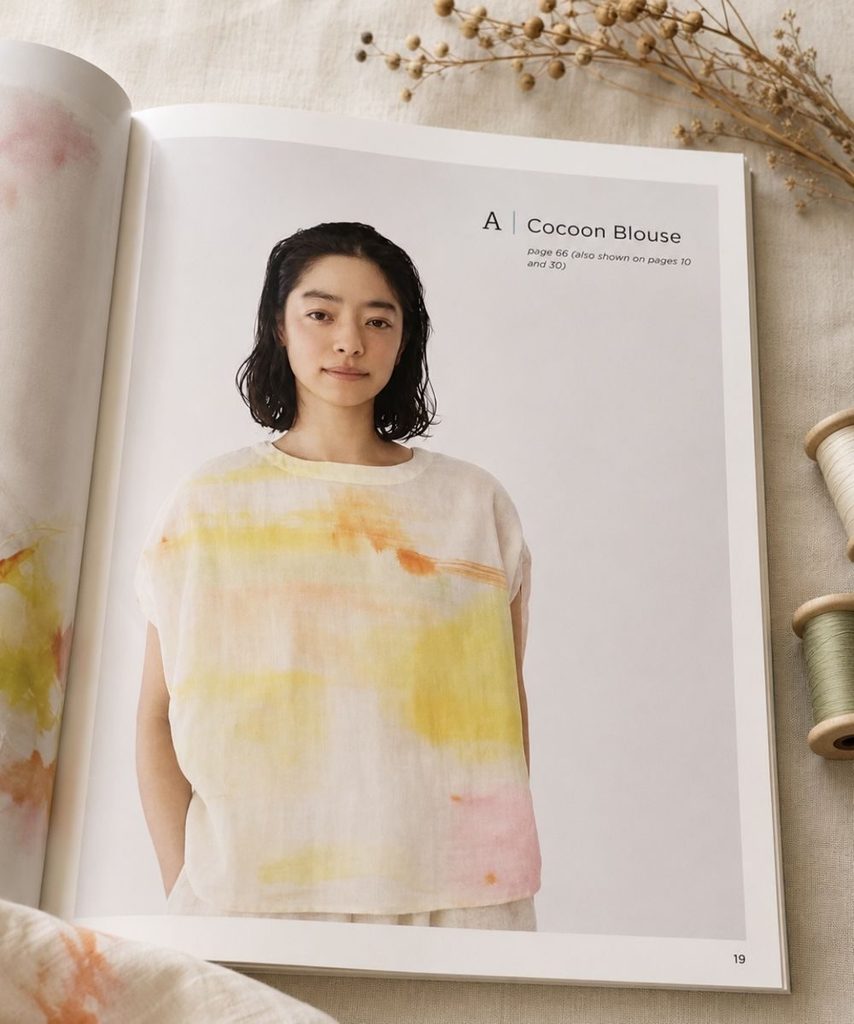
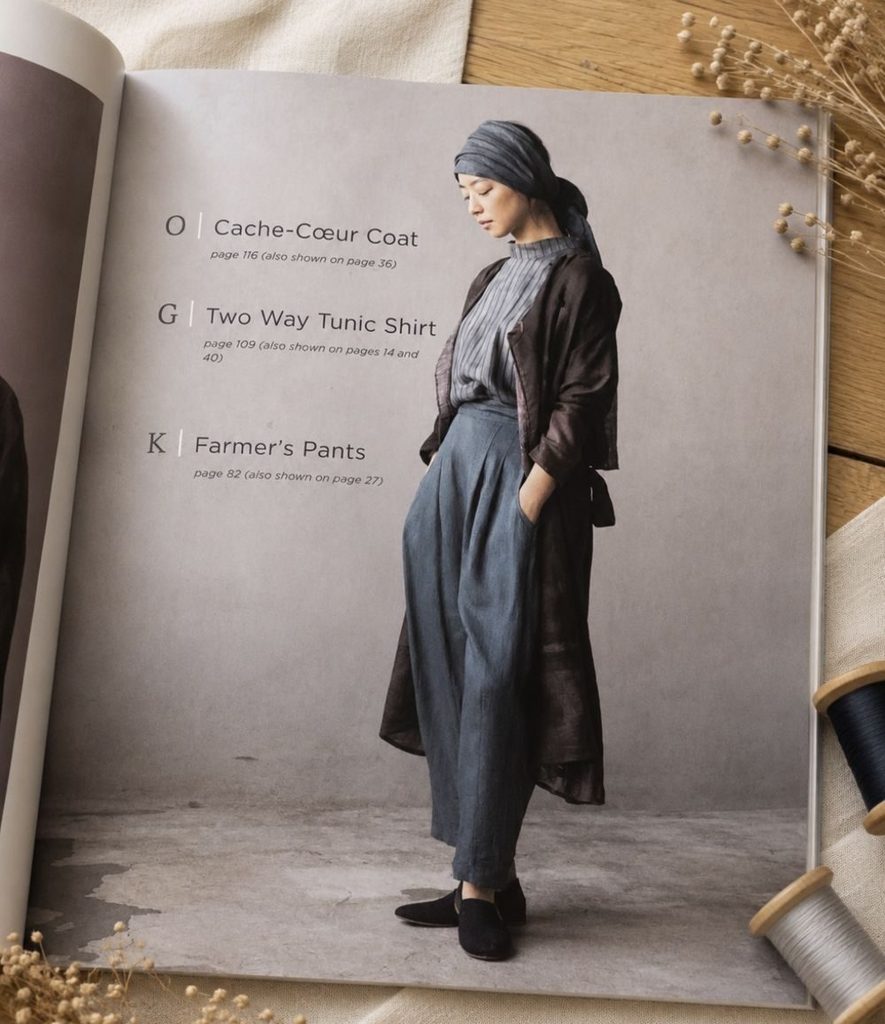
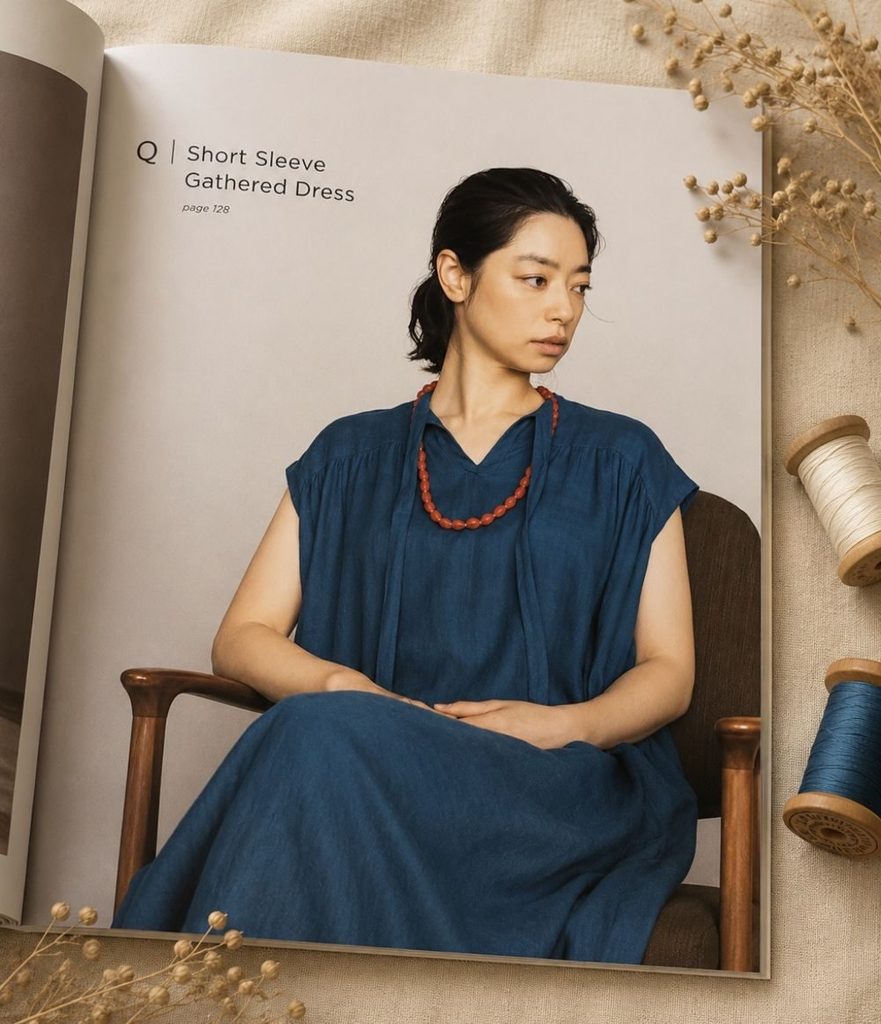
This is one of the few Japanese sewing books you can actually read in English. It gathers eighteen patterns meant to be worn across the seasons, with full-size pattern sheets tucked in the back. Among them: a cocoon blouse and its matching vest, a bias tank top, a two way tunic shirt, wide-leg and farmer’s pants, an antique skirt, a cache-cœur coat, a short sleeve gathered dress, even a felted cocoon dress for the cold months. The English edition from Zakka Workshop is a pleasure to work from. The diagrams are roomy and well-spaced, the text is clear and dark, and the measurements come in both metric and imperial. Small things on paper. In practice, though, they are the difference between a book you admire on the shelf and a book you take to the cutting table.
The fabric leads
It is also, simply, a lovely object to spend time in. The photography is soft and unstyled in the best sense: real light, real cloth, garments shown on a body rather than flattened on a table. And the book moves through the year rather than through a difficulty ladder. You are not marched from easy to hard. Instead, you drift from a summer tank toward a wool-gauze layer, the way an actual wardrobe grows. That structure is half the pleasure. It is also a gentle argument for sewing seasonally instead of all at once.
What makes this book Nani Iro, and not simply another pattern collection, is that order again: cloth first. The garments are drawn around the fabric, not the other way round. The book makes that explicit with three sections most pattern books skip entirely. One is on choosing and pairing fabric. One is on experimenting with the patterns. And one is on how a single design shifts when you change the cloth beneath it. A cocoon blouse in crisp double gauze and the same blouse in soft wool gauze are, quietly, two different garments.
The silhouettes themselves are deliberately simple, and that is the point, not a shortcoming. A loose tunic in a painterly double gauze does not want darts and seams competing for attention. The garment is the frame; the textile is the picture. So if you already love Nani Iro fabric — or the kind of quiet, watery prints that live in the same world — this book finally gives it somewhere to go. And because the pieces are built for layering, the same few makes carry you from a linen summer into a wool-gauze autumn. It never feels like a costume change.
A note for petite sewists
This is the part I keep coming back to. Japanese patterns typically grade for a height of around 160 to 165 cm. That already sits far closer to petite proportions than most Western patterns, which are often drafted for 168 cm and up. In practice, that means less adjustment and more making. You spend fewer evenings shortening a bodice or redrawing an armscye before you have sewn a single real stitch. The sizing here runs S to XL with generous ease, so it forgives a lot on its own. But it is the starting proportions that are kind to smaller frames, in a way I rarely get straight out of a Western envelope. For a petite sewist, that head start is quietly a big deal.
The honest bits
I would not hand this book to an absolute beginner. Like most Japanese sewing books, the instructions are spare: a handful of line drawings, and a trust that you already know how to set a sleeve or finish a seam. There is real beauty in that economy. But it assumes a little fluency, and if you want a pattern to hold your hand through every step, you will feel the gaps. The shapes are loose and soft by design, too. So if the wardrobe you are dreaming of is fitted and tailored, this is not the book to build it from.
But if you are drawn to easy, seasonless pieces — the kind you reach for without thinking, that ask nothing of you on a busy morning — and you want the fabric to be the loudest thing in the room, it belongs on your shelf. It is the book I reach for when someone asks where Japanese sewing and slow, genuinely wearable clothes meet. Not the flashiest recommendation I could make. The one I actually mean.
One more note, if Nani Iro pulls you in the way it pulled me. This is not Naomi Ito’s only English collection. Her earlier book, The Nani Iro Sewing Studio, gathers another eighteen patterns in the same unhurried spirit. It is a natural next stop, once this one has earned its place on your table.
Before the patterns, there are the fabrics. Start there, and the rest of the book opens.
The books · A Year of Sewing with Nani Iro by Naomi Ito (Zakka Workshop) · Ad
The Nani Iro Sewing Studio by Naomi Ito (Zakka Workshop) · Ad