some sewing books you read. this one you decode.
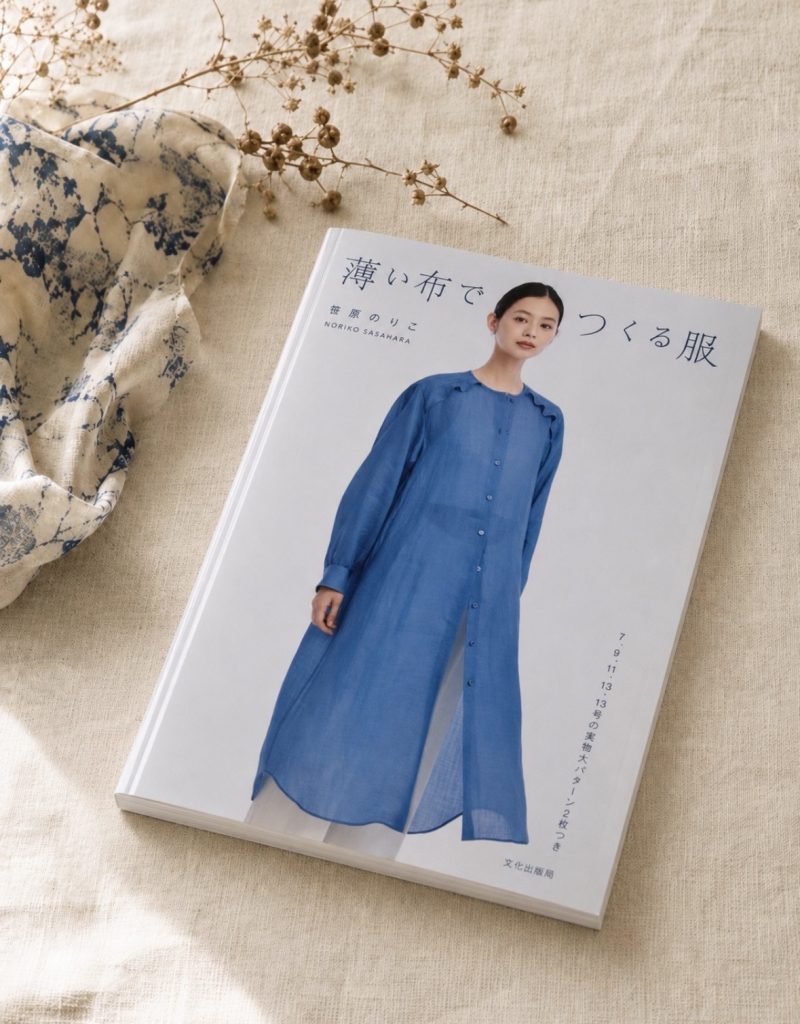
what it is
薄い布でつくる服 — „clothes made from thin cloth“ — is noriko sasahara’s study of the lightest, most translucent fabrics: organza, lawn, voile, chiffon. it collects thirteen designs built entirely around cloth that lets the light through — spring and summer pieces, soft layers, and a few sheer, dressier things it would be hard to find a pattern for anywhere else. sasahara trained at bunka in tokyo and now works mostly on sewing books; her style is quiet and refined, and it shows on every page. the book runs to just seventy-two pages, published by bunka in june 2025, and a good part of that space goes to photographed step-by-steps for handling sheer fabric — bound seams, French seams, facings that don’t show through — which is exactly the part that usually goes wrong.
clothes made from cloth that lets the light through.
the pieces
the range is wider than „thin fabric“ might suggest. there’s a fine black cardigan in ramie lawn, pintucked and edged with cotton lace, that reads as structured despite being almost weightless (design a). a beige organza peplum blouse, sheer enough to layer over anything (design e). a camel sleeveless dress with a gathered v-neck and a drawstring waist. a black camisole dress in a textured cut-jacquard. quiet clothes, most of them, in the kind of muted palette — camel, navy, ivory, olive — that natural fabric wears best.
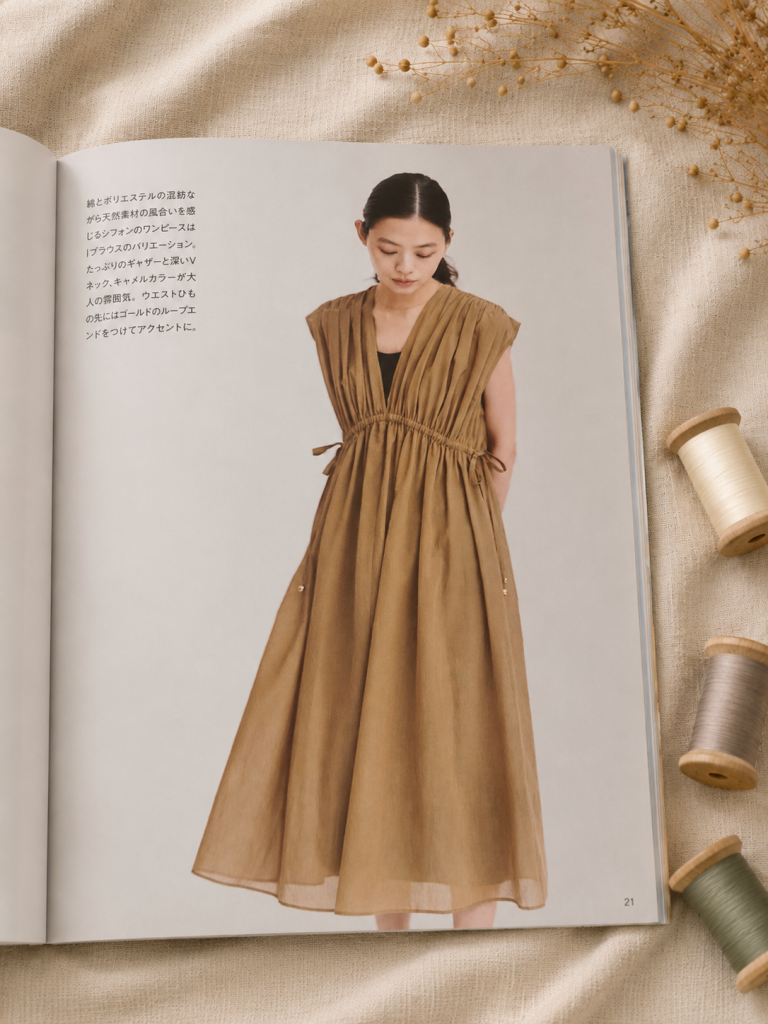
gathered dress
sheer camel, drawstring waist.
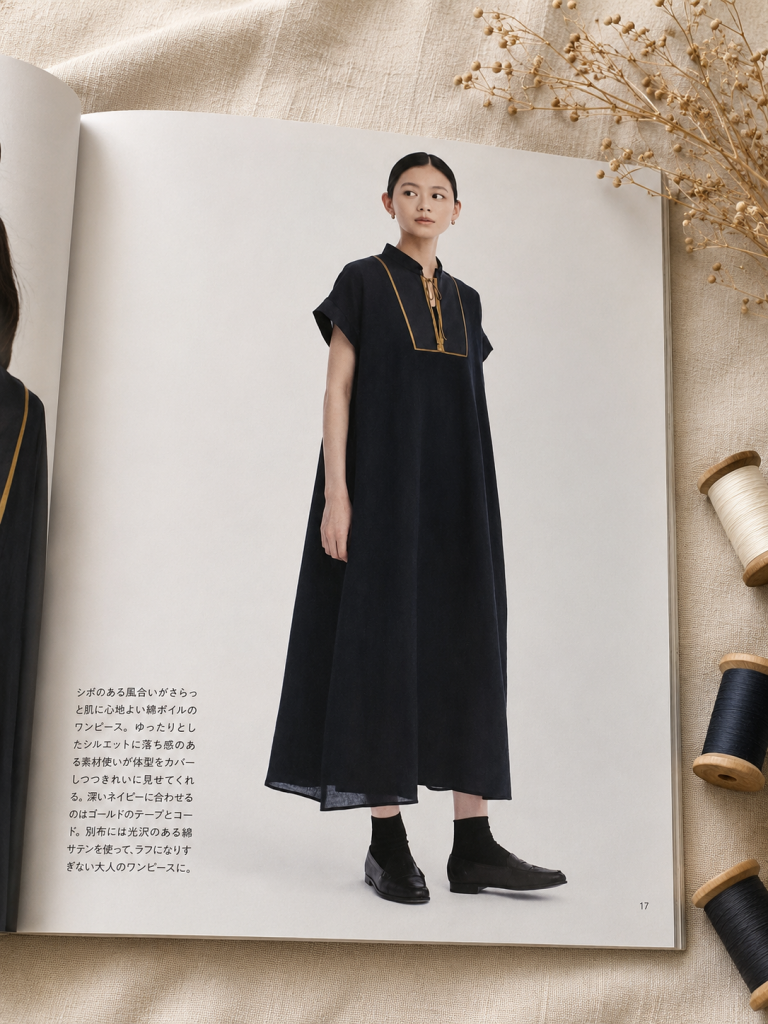
navy dress
cotton voile, gold cord trim.
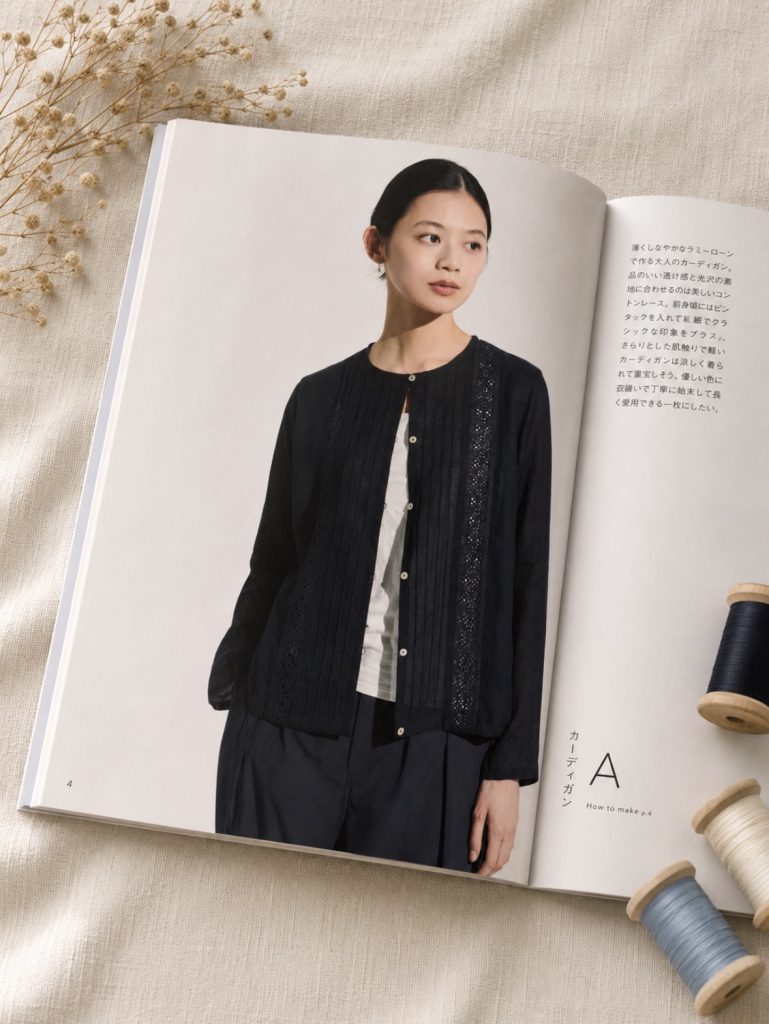
cardigan · a
ramie lawn, pintucks and lace.
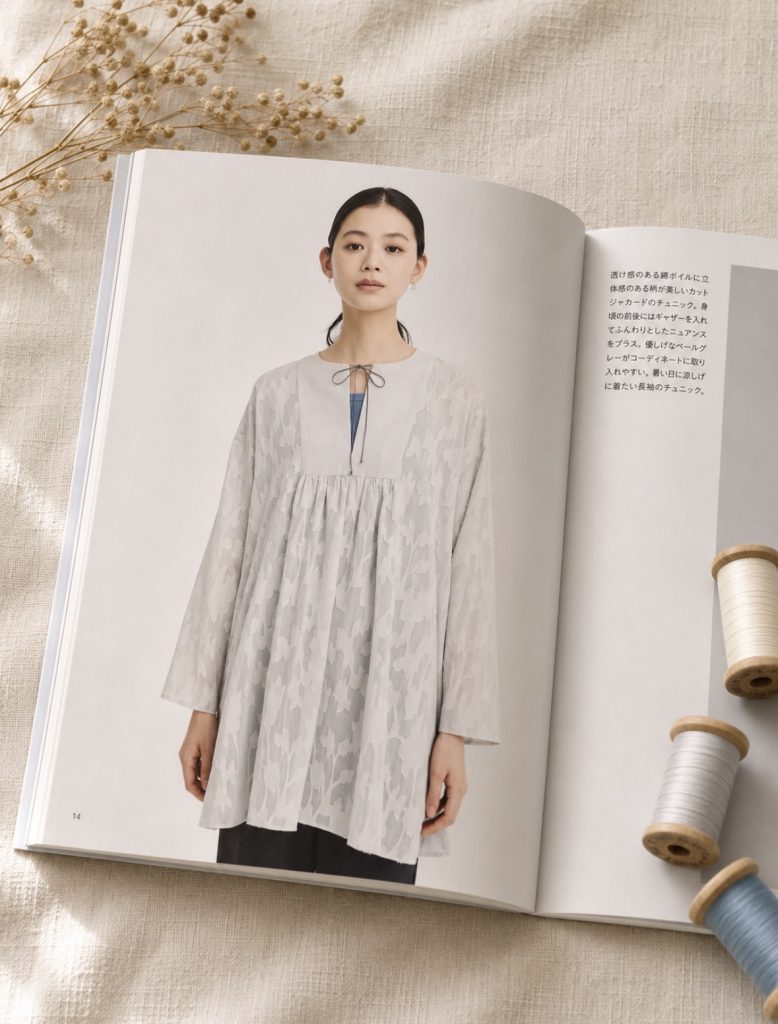
tunic
cut-jacquard, gathered yoke.
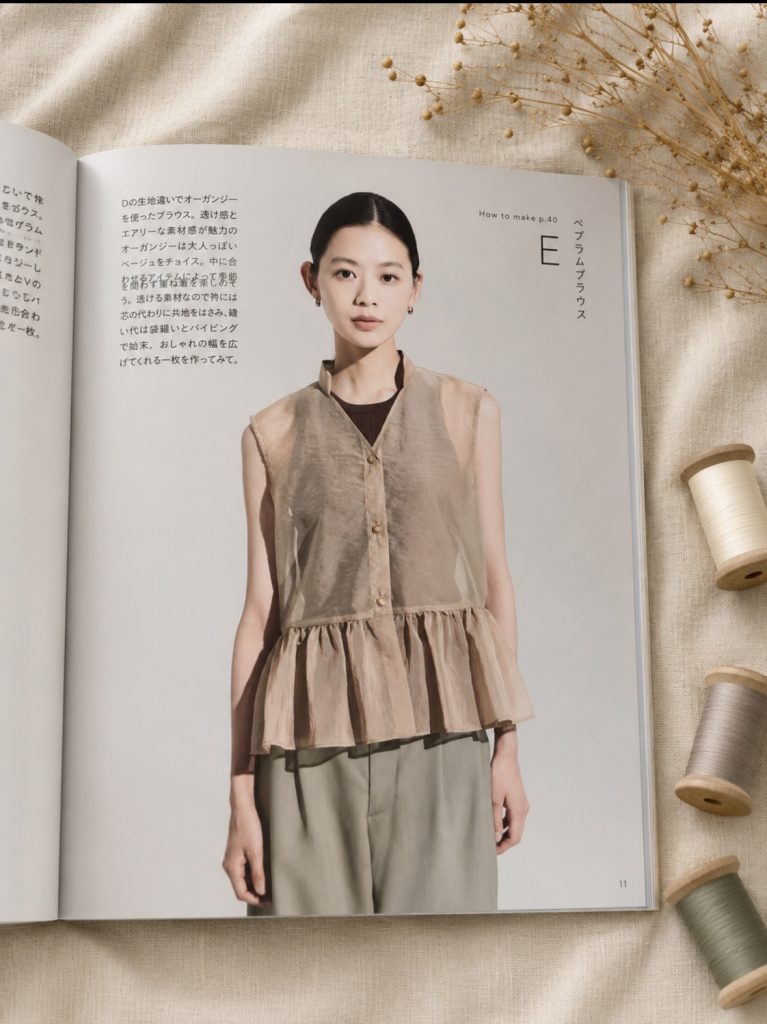
peplum blouse · e
beige organza, sheer layer.
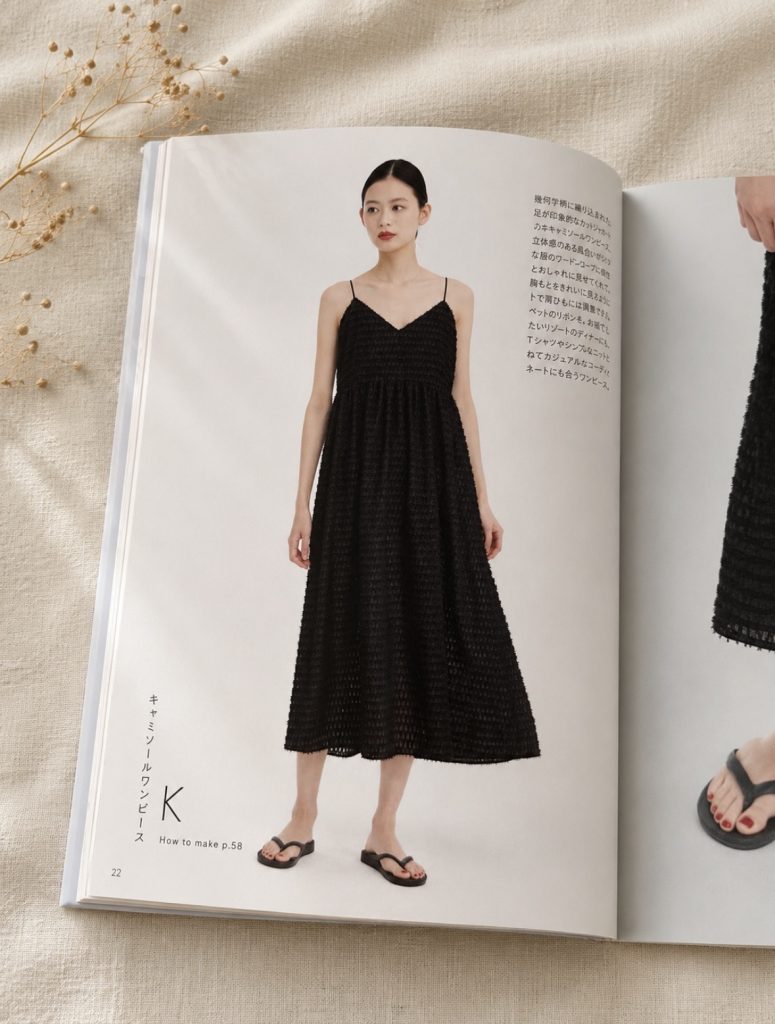
camisole · k
textured cut-jacquard.
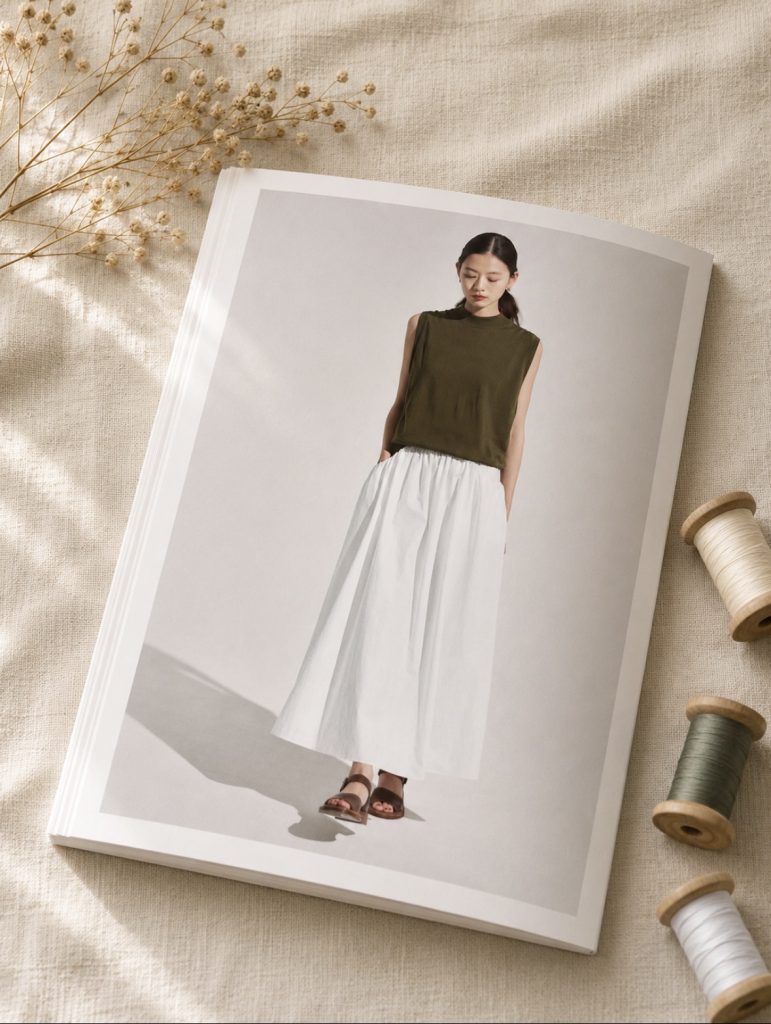
top & skirt
olive knit, full white cotton.
the part where you decode it
there’s no english edition, and there probably never will be. for a long time that would have stopped me. but japanese sewing books aren’t really written to be read — they’re drawn to be understood. the construction lives in the diagrams: numbered steps, small arrows, tiny cross-sections of a folded hem or a bound seam. once you learn that visual grammar, the japanese text is almost a caption. a translation app handles the few words you actually need. it’s less a language barrier and more a different way of reading a pattern — by its lines instead of its words.
why it suits a petite frame
two reasons. first, the sizing. japanese patterns are cut to japanese measurements — here the full-size sheets cover 7, 9, 11 and 13号 — which runs noticeably smaller than western sizing and sits naturally close to petite. often it’s less grading a pattern down and more choosing the size that’s already there.
second, the cloth itself. sheer, drapey fabric falls close to the body and lets light pass through it, and that softness does the same quiet elongating work a good drapey trouser does — it adds length, not bulk. layered over something solid, a translucent top or dress reads as depth rather than volume, which is exactly what a smaller frame wants.
less a language barrier, more a different way of reading a pattern.
it isn’t a beginner’s book, and it isn’t a quick one. sheer fabric is fussy, and thirteen designs is a lot to work through. but if you already sew, and you’re ready to read a pattern by its lines rather than its words, this is a beautiful place to start — a whole wardrobe built from the cloth most people are afraid to cut into.