
Ad | Review copy of Sashiko for Making & Mending provided by Tuttle Publishing
Saki Iiduka · Tuttle Publishing, 2021 · ISBN 978-0-8048-5385-9
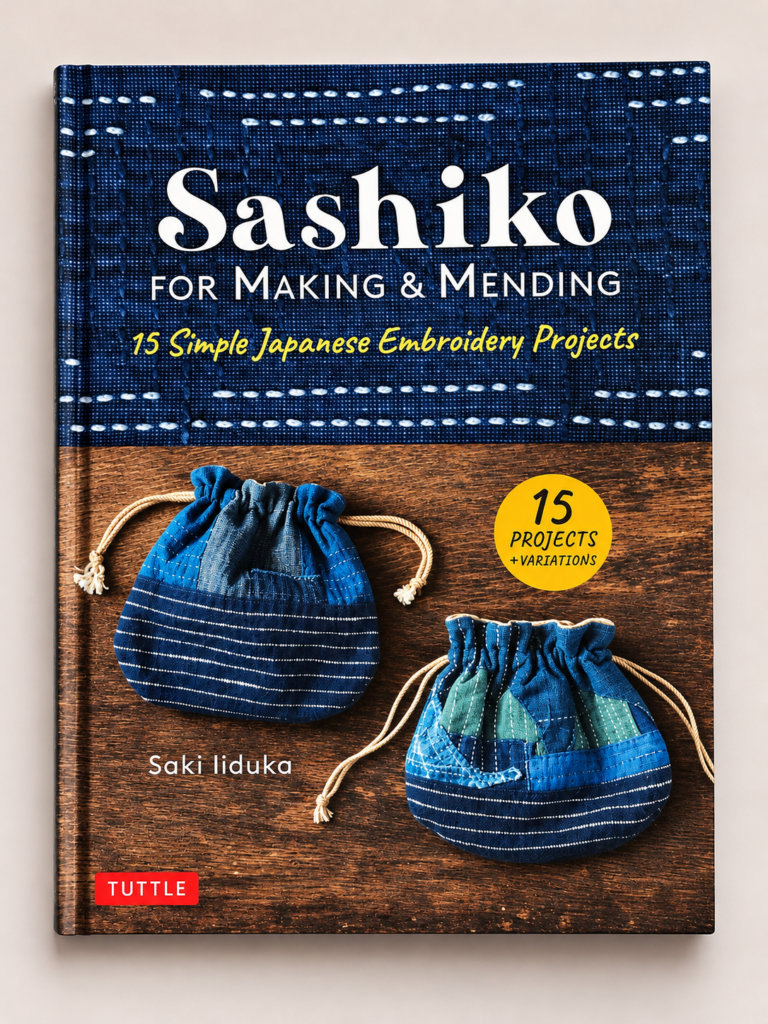
Sashiko for Making & Mending by Saki Iiduka is a book in which the philosophy matters as much as the stitching. It contains 15 projects with variations. Iiduka opens with a personal introduction, and several of the pieces in the book are things she uses in her own daily life.
Projects made from what already exists
Iiduka tries not to buy new fabric. She uses secondhand tenugui, Japanese cotton towels, and dyes them again. The 15 projects range from the smallest pieces, such as good luck charm bags and needle cushions, to larger ones like bags. The book is beautifully photographed.
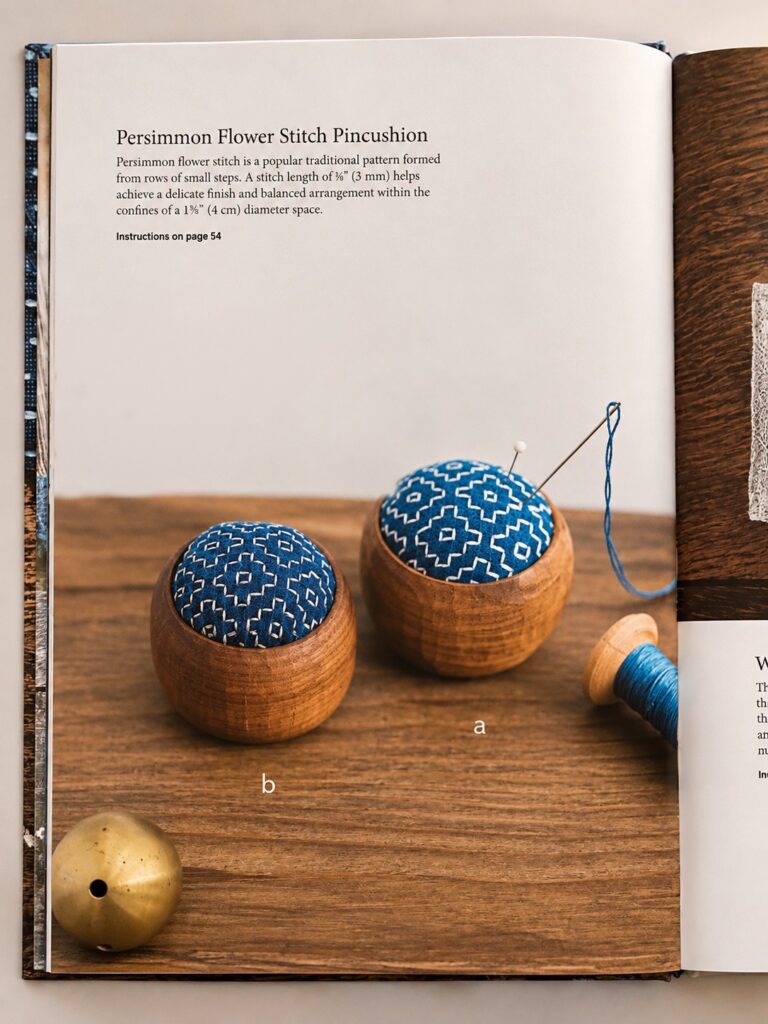
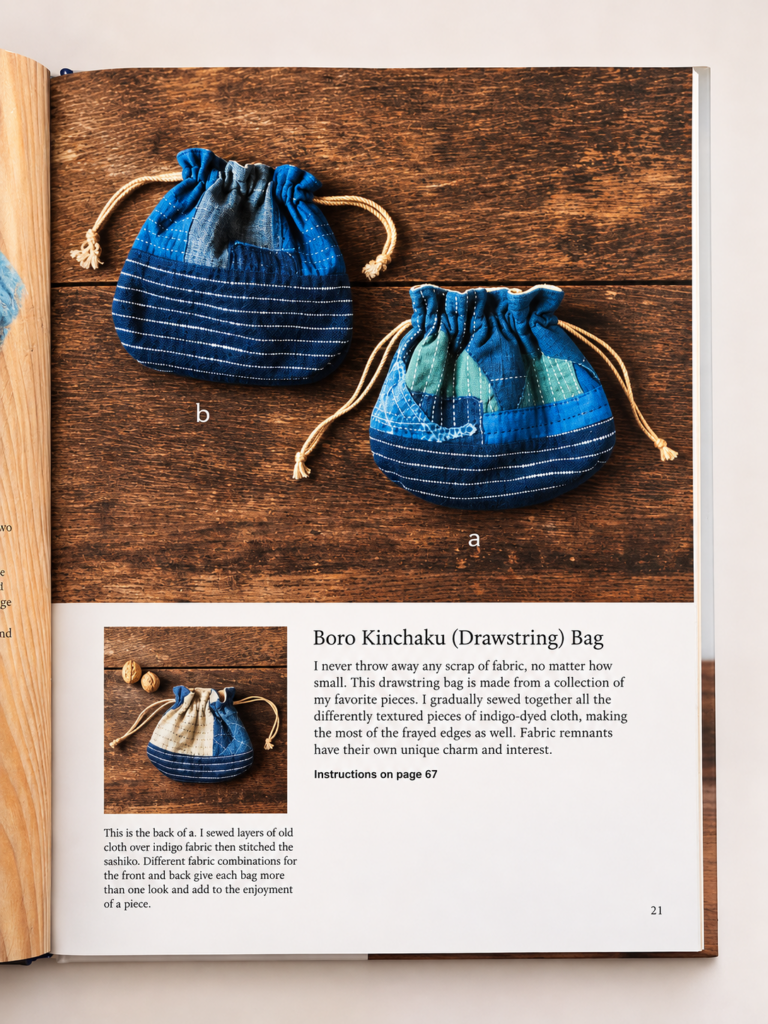
How the book is built
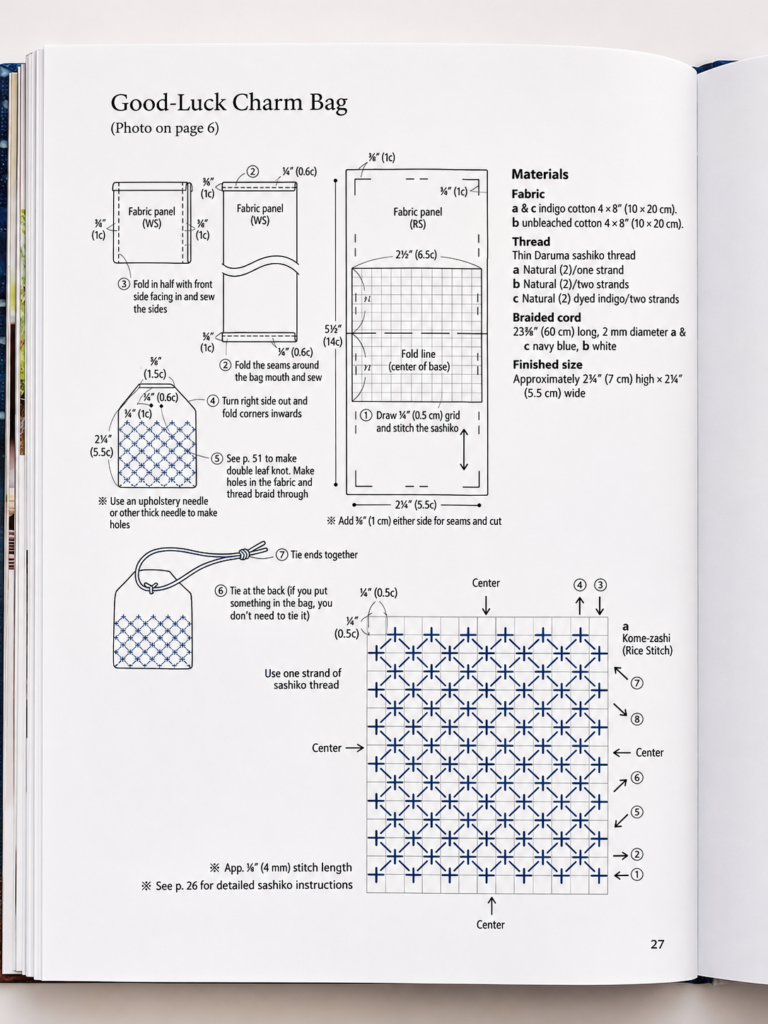
After the projects comes one page of sashiko basics, with a list of the materials you need. Then follow very precise instructions for a selection of stitch patterns. I tried the rice stitch myself, and it worked well on the first attempt.
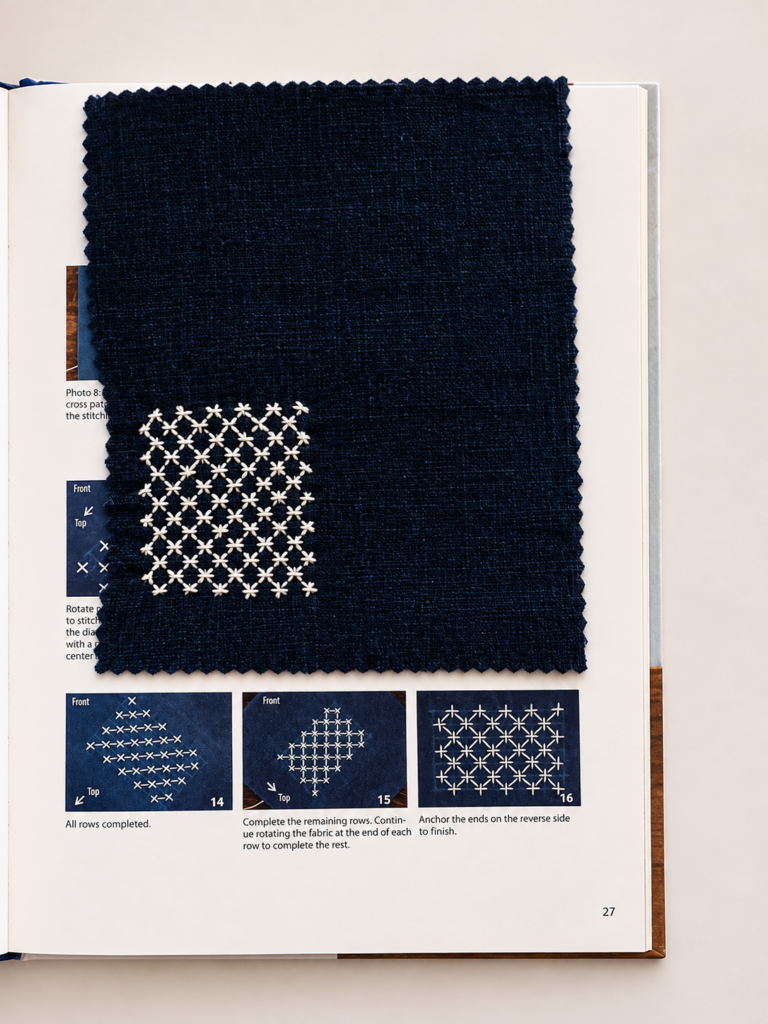
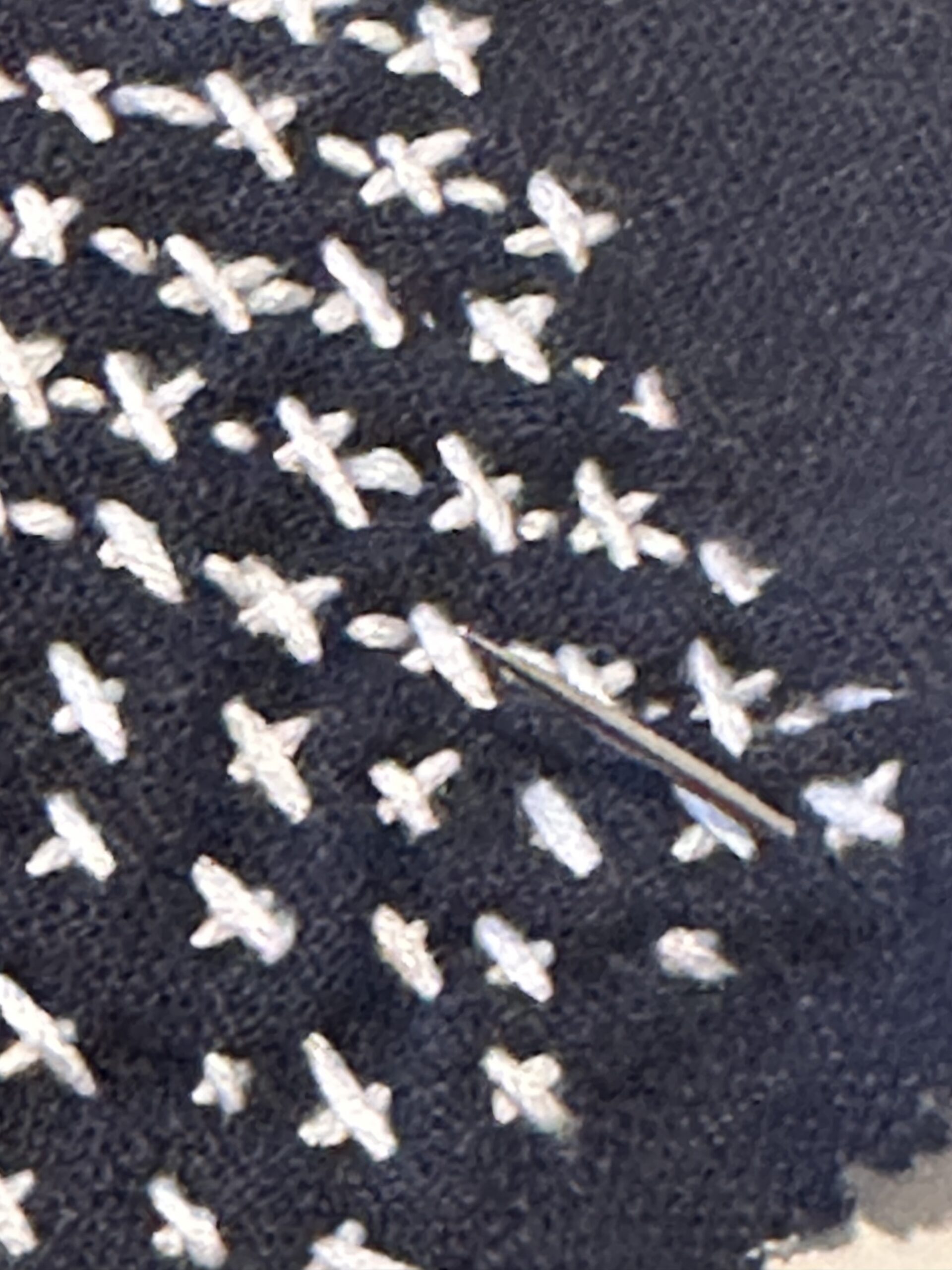
At the back there is a stitch library, followed by the instructions for the individual projects.
A detour to Takayama
A short excursion tells of Iiduka’s life in Takayama. By coincidence, it is one of the places we got to know and love on our trip to Japan. It is a special place where many artists and craftspeople live, and we talked with several of them. Many had moved from Tokyo to Takayama because the megacity was too stressful and they could not live out their creativity there.
Mending: where sashiko comes from
The next excursion is about mending, the actual origin of sashiko: repairing clothes. I find the approach interesting. Mending here does not mean making the damage invisible. The damaged spot is given new worth by becoming something else that is beautiful. That feels very Japanese to me, and it is an attentive way of treating the things around us. A short mending guide follows.
Who this book is for
If you have never done sashiko, you can start with this book. It has one page of basics with the list of materials, and very precise instructions for a selection of stitch patterns. The technique is not hard to learn. It takes patience: a pattern grows stitch by stitch, and the stitches are small.
The book will suit you if you like small handmade things, if you would rather use fabric that already exists than buy new, or if you have clothes that need mending. And if you are drawn to Japanese craft and the thinking behind it, you get both in one book.
What I take from it
Near the end, Iiduka writes again in a personal voice about what matters to her and what the craft means to her. One sentence stayed with me: when her sashiko becomes too even with more practice, she finds it boring, and she suggests closing your eyes.
That reminded me of an exhibition on wabi-sabi I once visited: seeing beauty in imperfection. I love the connection of philosophy and handcraft in this book.
Book details
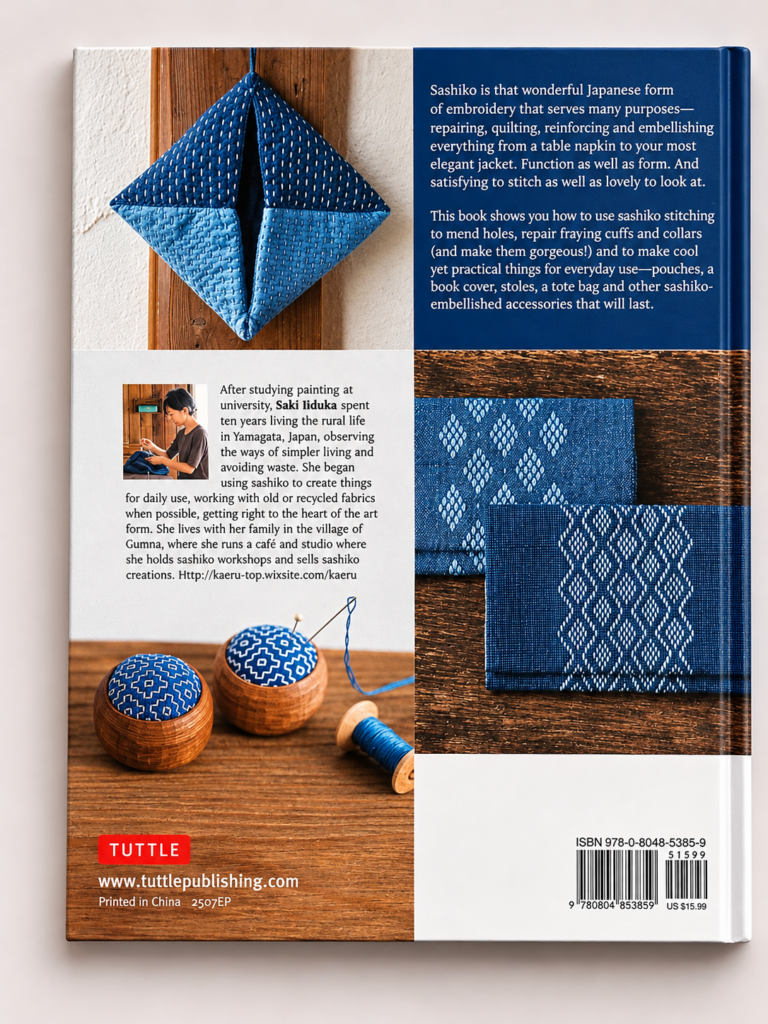
Sashiko for Making & Mending: 15 Simple Japanese Embroidery Projects
Saki Iiduka
Tuttle Publishing, 2021
80 pages
ISBN 978-0-8048-5385-9
Amazon.com · Amazon.de
Thank you to Tuttle Publishing for sending me a review copy of the book.
This post contains Amazon affiliate links (ad). As an Amazon Associate I earn from qualifying purchases — at no extra cost to you. All opinions are my own, and buying the book through the link is a lovely way to support my work.