
for a long time i thought the rule for a petite frame was simple: always define the waist. cinch it, belt it, mark it — make sure the eye knows exactly where the middle is. and most of the time, that’s good advice.
but dresses are where it gets more interesting. because where a waistline sits — or whether you draw one at all — can completely change how a dress reads on a small frame. for better or worse.
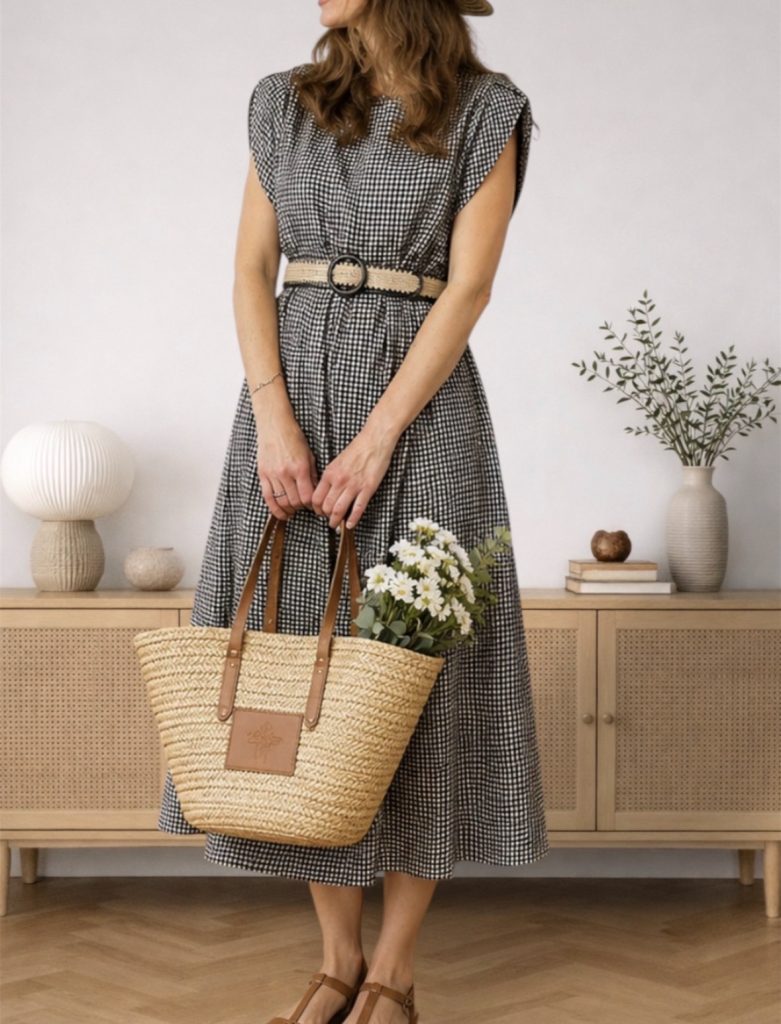
the waist decides the proportions
on a dress, the waistline is the one seam doing the most work. it splits the whole silhouette in two — how much reads as body above, how much reads as leg below. get that split right and the dress looks made for you. get it wrong and even a beautiful dress can end up wearing you instead.
this matters more for us than for almost anyone. on a taller frame there’s room to spare, so a waist an inch or two off barely registers. on a petite frame there’s no spare — a couple of centimetres is the difference between long legs and none.
natural waist, or a touch above
as a rule, the most flattering line sits at your natural waist, or just slightly above it. that’s the point that gives you the most leg underneath — and leg is what reads as height.
the one to watch is the dropped waist. a seam that lands on the hip — however lovely on the hanger — cuts the legs off high and stacks all the length into the bodice. on a small frame it’s the fastest way to lose the height you have. if you love the style anyway, that’s exactly where a shortened bodice earns its keep: bring the waist seam back up to where your own waist actually is.
three ways to draw the line
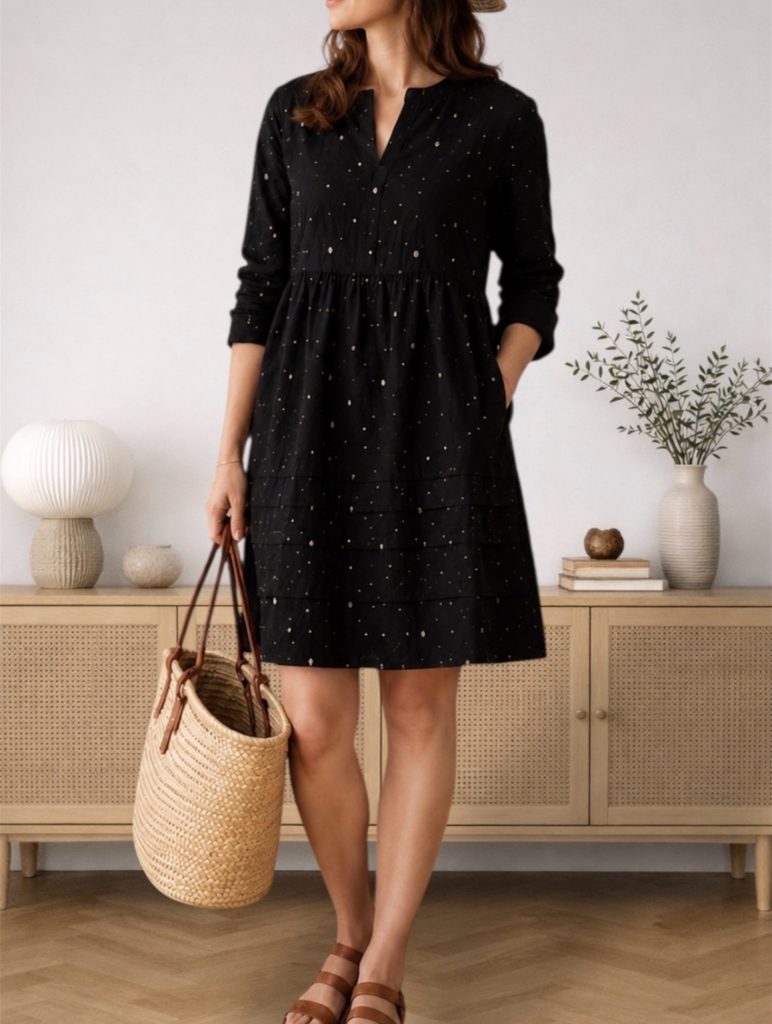
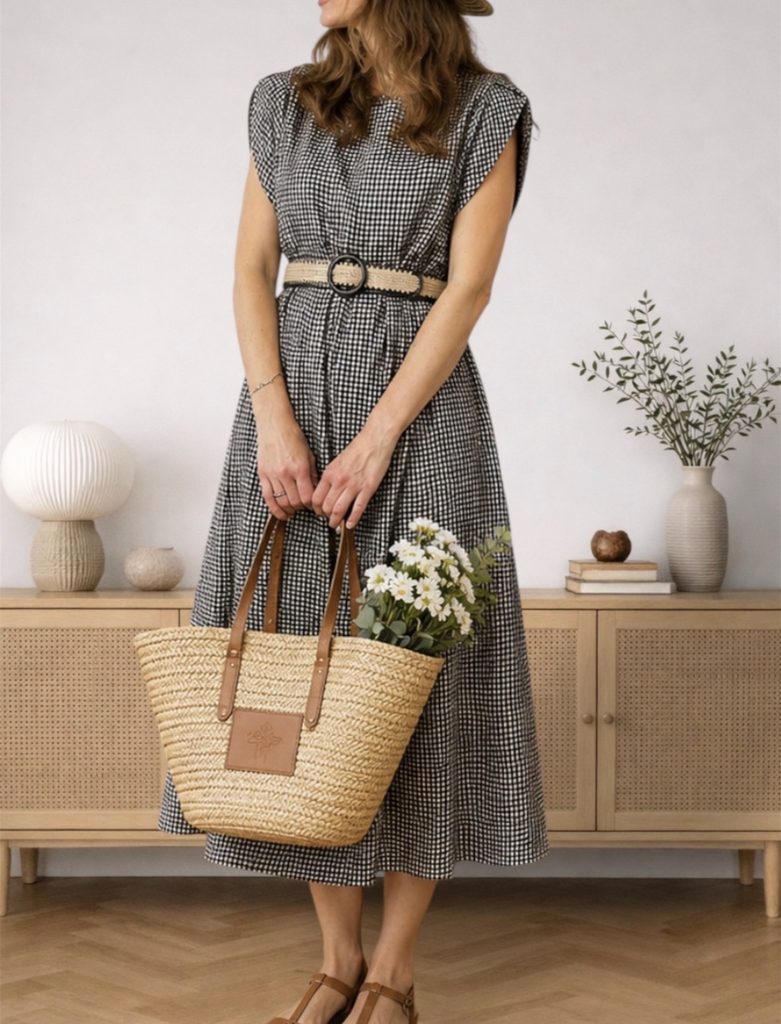
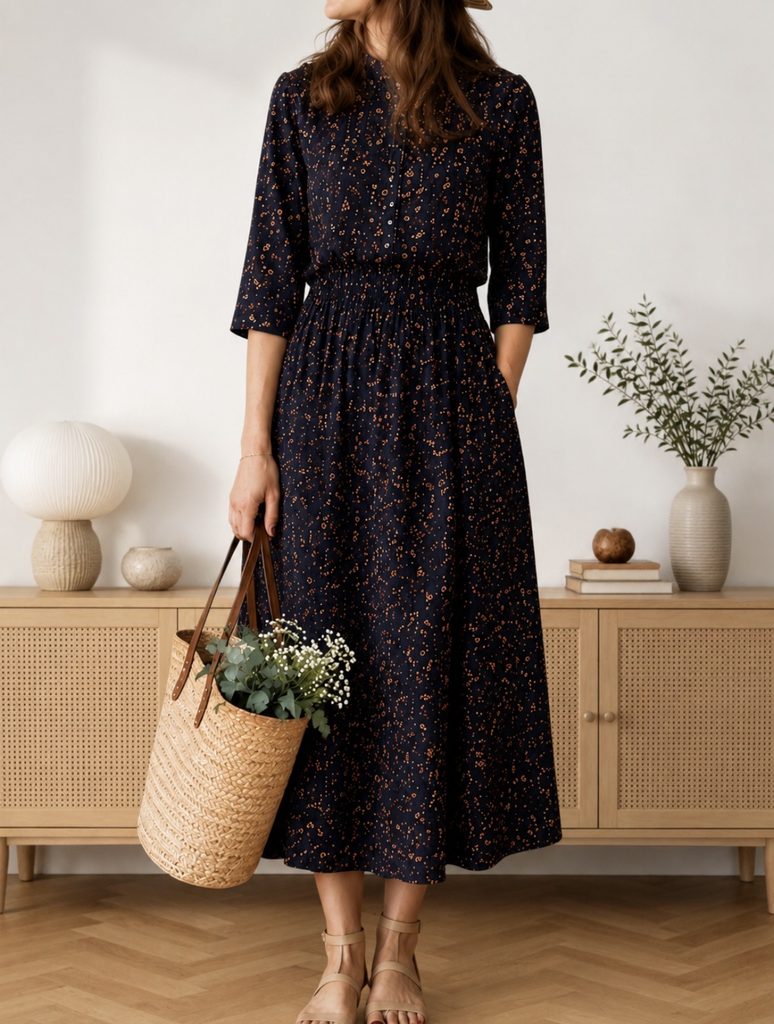
there’s more than one way to mark a waist, and they don’t all mean cinching.
a belt at the natural waist. the simplest, most forgiving one — you decide exactly where the line falls, and you can move it up a centimetre in a second. a straight, softly gathered dress becomes two clean proportions the moment you belt it high.
a shirred seam, built in. here the waist is sewn into the dress itself — elasticated, gathered, sitting right where it should. no styling required, nothing to fuss with. the dress does the work and holds the line all day.
loose, but one clean line. and then the opposite — no waist at all. a short, easy shape that skims from the shoulder and never cinches anywhere. this works too, but only if it stays one uninterrupted line and the hem lands well. the moment a loose dress adds a low seam or a tier down near the hip, it borrows the same trap as the dropped waist.
not a waist at all costs
so this isn’t „always belt it.“ it’s almost the opposite of a rule. sometimes the best line is a defined one; sometimes it’s no line at all. what stays constant is the thing underneath — balanced proportions. either you split the silhouette high and on purpose, or you keep it as one long, unbroken column. what doesn’t work is the in-between: a waist marked in the wrong place, low and by accident.
and if you sew your own
this is the part i love, because when you make the dress, the waistline isn’t something you’re stuck with — it’s a decision. ready-to-wear puts the seam wherever the size chart says, and a dropped waist on a standard block lands even lower on us. sew it yourself and you place that line exactly at your own waist, or a whisper above, every time. raise a shirred panel. shorten a bodice. or leave the waist out entirely and just get the length right. that’s the whole freedom of it.
so before you write off a dress for its shape, look at one thing first: where’s the waist, and is it where you’d put it? that single line tells you more than the print, the fabric or the length ever will.
which silhouette do you usually reach for — a defined waist, or one clean loose line?