How to read the size chart, the instructions and the pattern sheet when none of it is in English.
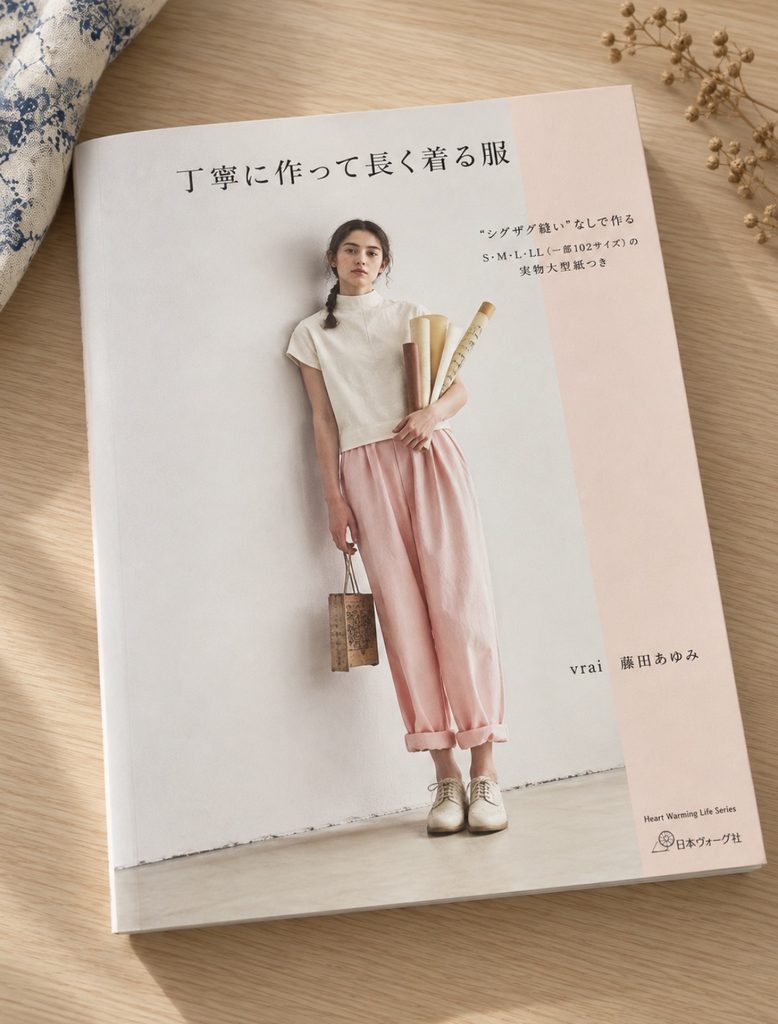
Japanese sewing books are, for the most part, not translated.
You buy one for the patterns — the proportions, the ease, the way a sleeve is drafted — and then you open it, and it is a diagram and a wall of characters. It is a specific kind of disappointment: the shapes are exactly what you wanted, and the instructions might as well be a locked door.
Here is the thing I wish someone had told me sooner. It is the same characters, book after book. The vocabulary of a sewing book is small, and it repeats. You do not need Japanese. You need about nine or ten words, and once you have them, most of a Japanese sewing book quietly opens up.
So this is that list — the words that actually earn their place, grouped by where you meet them: in the size chart, in the instructions, and on the pattern sheet.
In the size chart
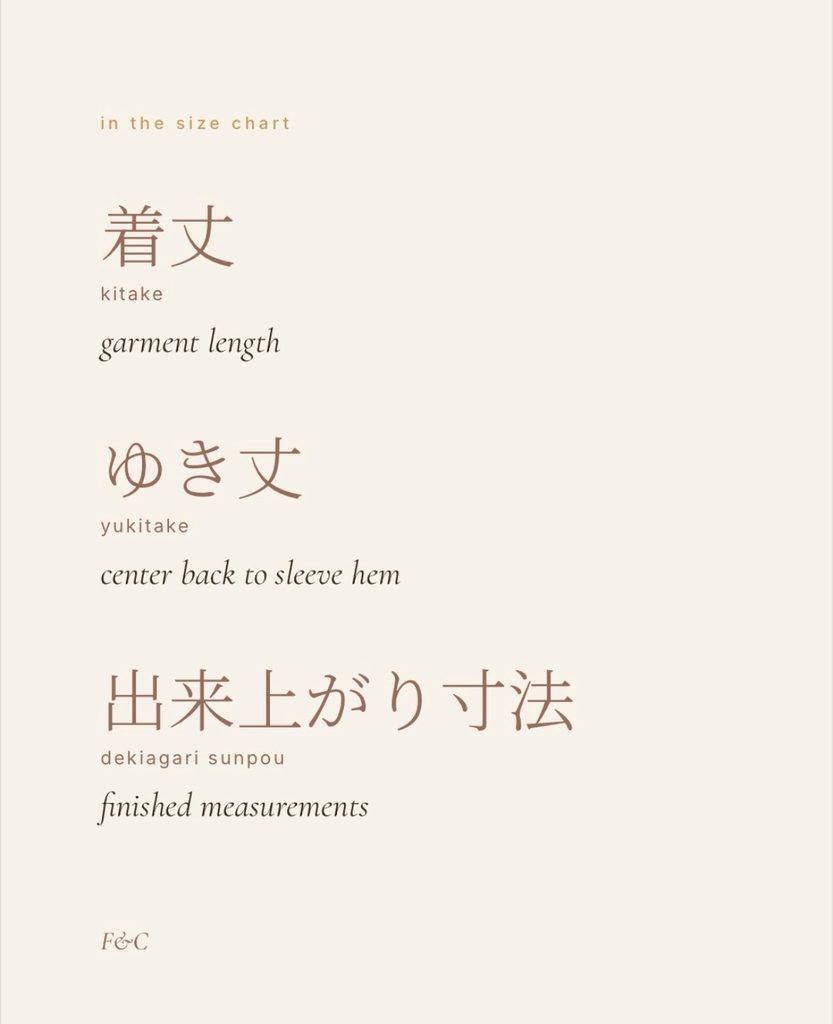
This is where I start with any new book, before I think about cutting anything.
着丈 — kitake — garment length. How long the finished piece is, top to hem. For a blouse or a dress, this is the number that tells you whether it will land where you want it to.
ゆき丈 — yukitake — center back to sleeve hem. Measured from the centre back neck, across the shoulder, down to the end of the sleeve. It is the closest thing to a shoulder-to-wrist measurement, and on a set-in or dropped sleeve it tells you far more about fit than a bust size ever will.
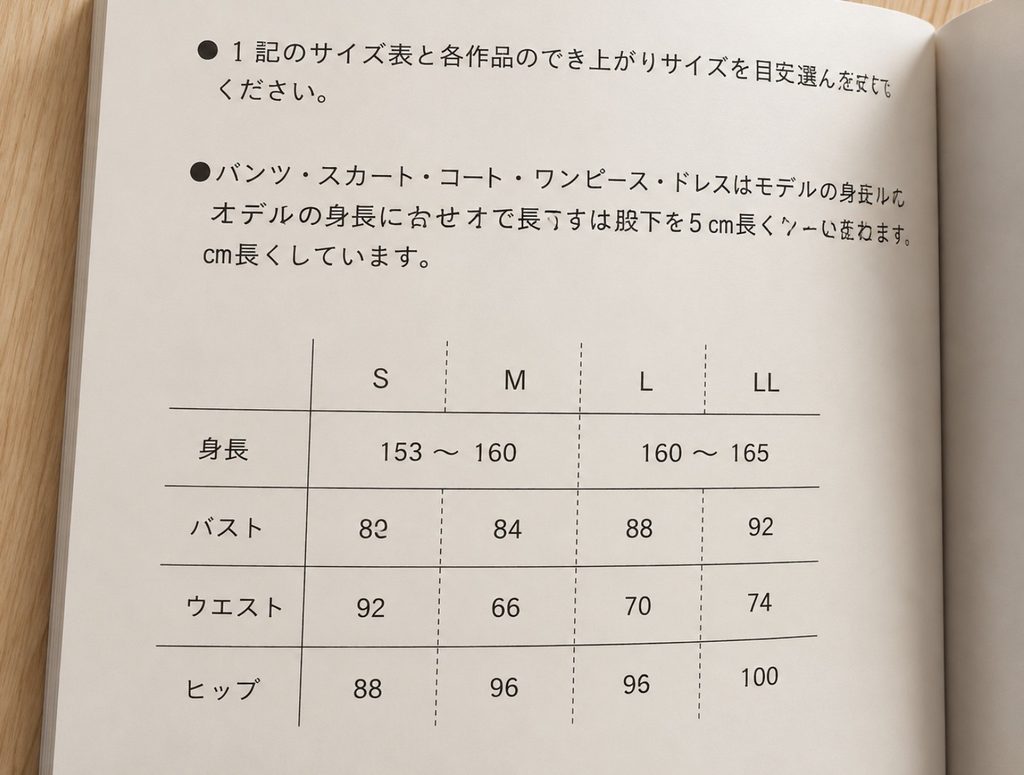
出来上がり寸法 — dekiagari sunpou — finished measurements. The single most useful column on the page. These are the dimensions of the actual garment once it is sewn — not your body measurements, the piece’s measurements. Finished measurements tell you how something will sit before you cut a single thing.
In the instructions
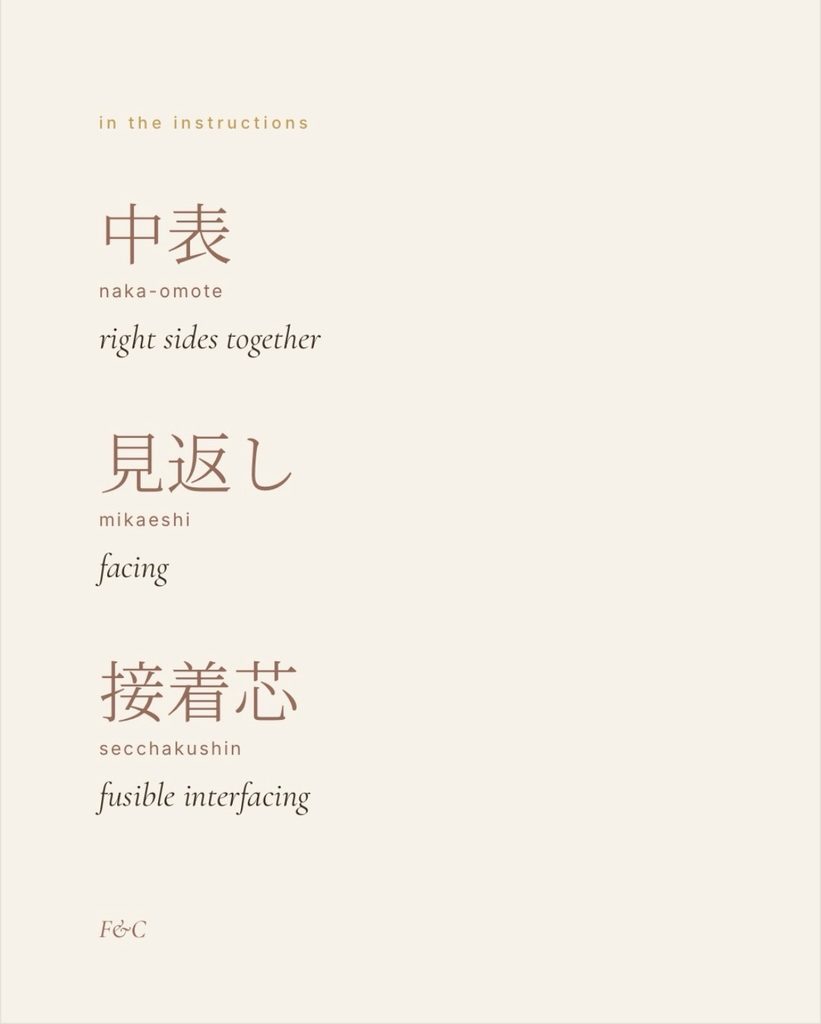
Once you are past the chart and into the step-by-step diagrams, these three come up again and again.
中表 — naka-omote — right sides together. The instruction you will see more than any other. Fabric placed right side to right side before you stitch.
見返し — mikaeshi — facing. The piece that finishes an edge from the inside — a neckline, a front opening — and gets turned to the wrong side so it doesn’t show.
接着芯 — secchakushin — fusible interfacing. The iron-on layer that gives structure to collars, cuffs, plackets and facings. When a diagram tells you to apply it, it usually means to this piece, on the wrong side.
On the pattern sheet
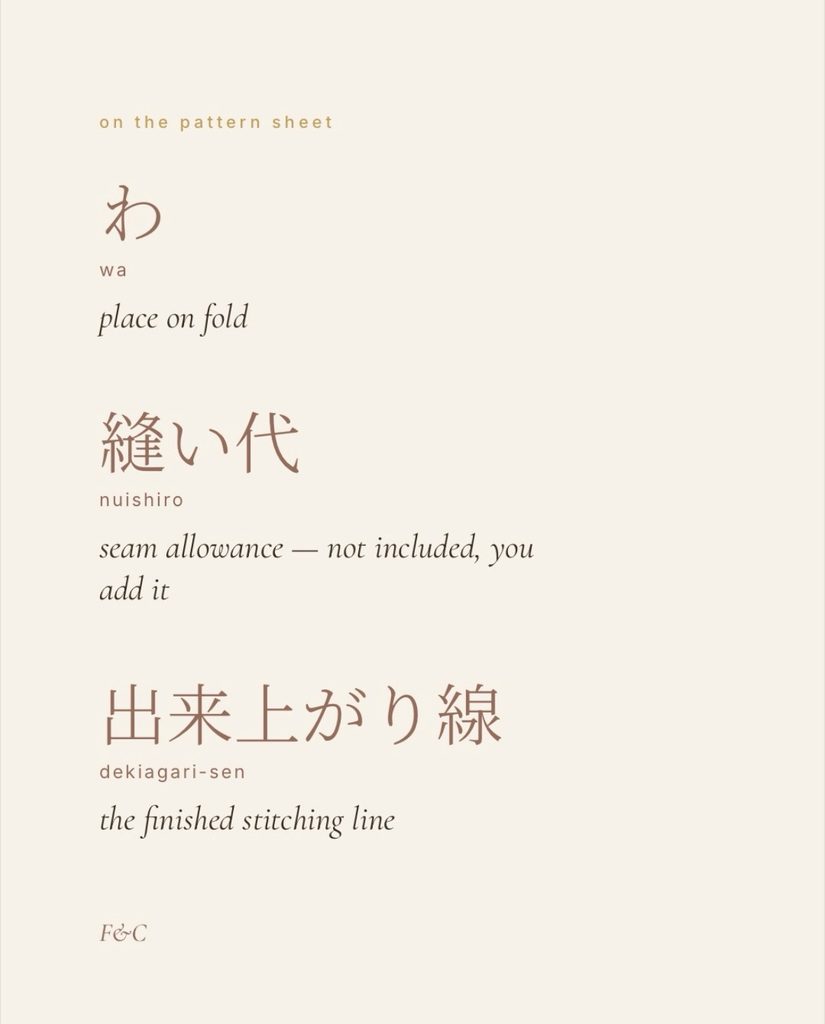
The pattern sheet is where the biggest surprise lives, so I have saved it for last.
わ — wa — place on fold. A single character marking the edge you lay along the fold of the fabric, so the piece cuts out symmetrically.
縫い代 — nuishiro — seam allowance. This is the one that catches people out. On a Japanese pattern sheet the seam allowance is not included. You trace the finished line, and then you add the allowance yourself — usually one centimetre on seams, more at hems. Miss this and your finished garment comes out a size too small, everywhere at once. It is not a mistake in the book; it is simply how these patterns are drawn.
出来上がり線 — dekiagari-sen — the finished stitching line. The line you trace: the actual seam line of the garment, before you add any allowance around it. Trace this, then add your nuishiro, and you are ready to cut.
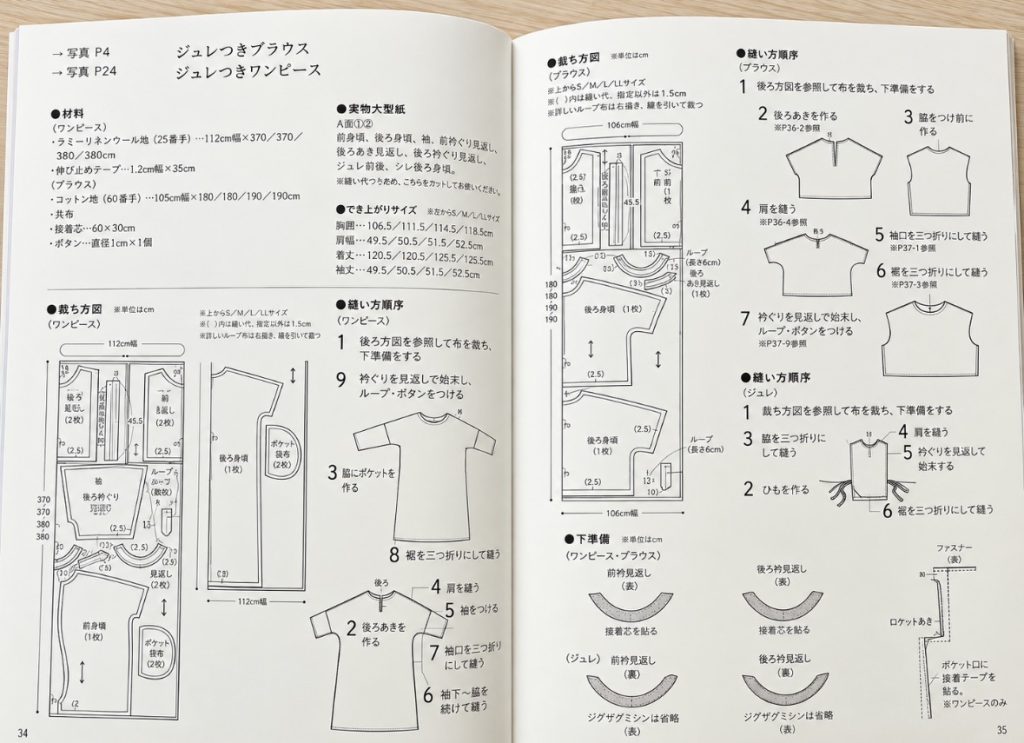
Why the size chart is the real shortcut
I sew at 158 cm, and the finished-measurements column has changed how I choose what to make. Garment length and shoulder-to-wrist tell me, before I cut, whether a piece will fit the way I want — or whether I need to shorten it first. A size label guesses at my body. Finished measurements describe the actual garment. For a petite sewist, that column is worth more than the size on the front of the pattern.
That is really the whole trick with Japanese sewing books: the language looks like the barrier, but the numbers are already speaking to you. Learn the handful of words that unlock them, and a beautiful book stops being something you admire on the shelf and becomes something you sew from.
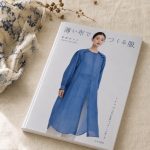
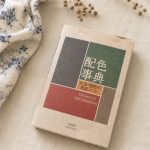
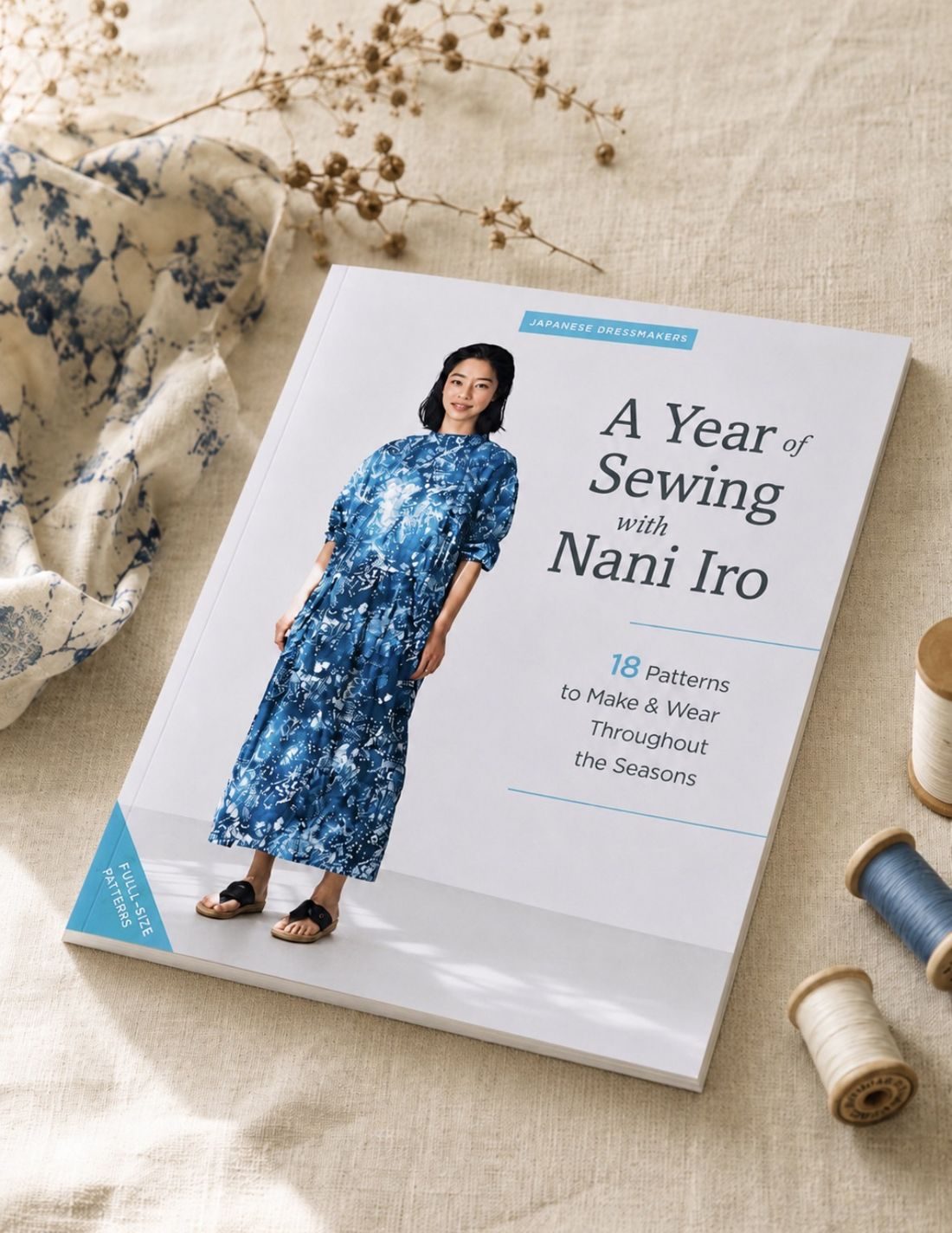
More from the shelf: 薄い布でつくる服 — the sewing book you decode, not read, A Year of Sewing with Nani Iro — before the patterns, there are the fabrics, and a dictionary of color combinations — the book I open before i choose fabric.
A printable glossary for Japanese sewing books
I am putting all of this together as a proper printable glossary — one page, everything in one place, the kind of thing you can keep next to the cutting table. It is coming a little later this autumn. If that is something you would use, tell me, and I will make sure you hear when it is ready.